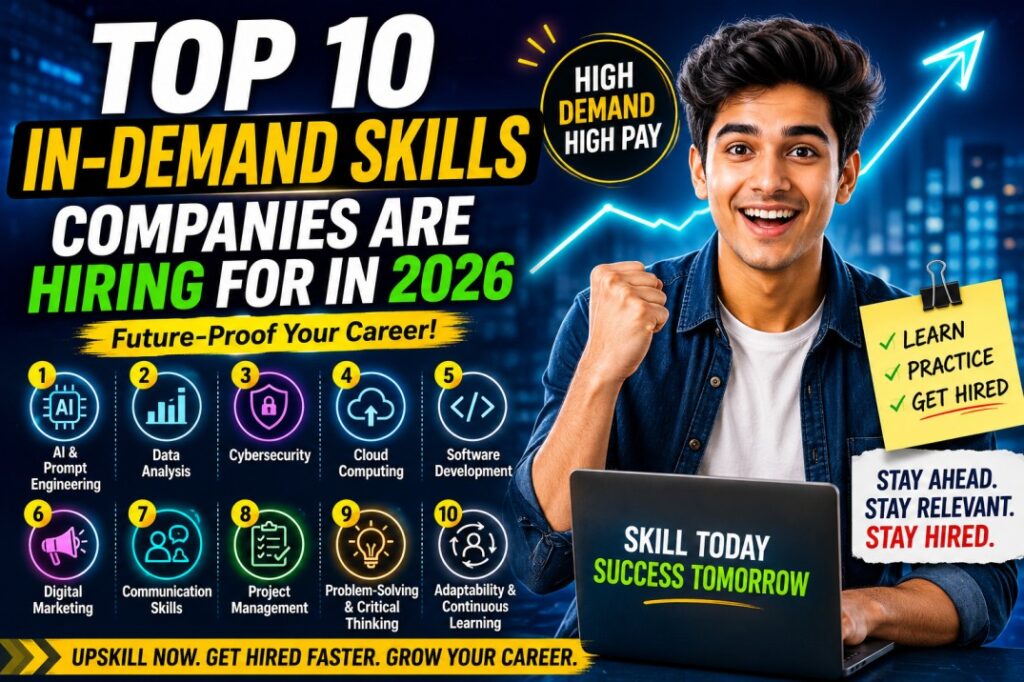
In-Demand Skills 2026: Advancements in artificial intelligence, automation, cloud computing, remote work, and digital transformation are changing how businesses operate. As a result, employers are looking for professionals who possess a combination of technical expertise and essential workplace skills.
Whether you’re a student preparing for your first job, a fresher entering the workforce, or an experienced professional planning your next career move, developing the right skills can significantly improve your employability and earning potential.
The good news is that many of these skills can be learned online, through projects, certifications, and practical experience.
In this guide, we’ll explore the top 10 in-demand skills companies are hiring for in 2026, why they matter, and how you can start building them today.
Why Skills Matter More Than Ever in 2026
Employers are increasingly focusing on skills rather than just degrees.
Many companies now evaluate candidates based on:
- Practical knowledge
- Problem-solving ability
- Adaptability
- Communication skills
- Continuous learning mindset
According to hiring trends across industries, candidates who continuously upgrade their skills are more likely to:
- Secure better job opportunities
- Earn higher salaries
- Adapt to changing technologies
- Advance faster in their careers
Let’s explore the skills that employers value most in 2026.
1. Artificial Intelligence (AI) and Prompt Engineering
Artificial Intelligence is no longer limited to technology companies.
Businesses across healthcare, finance, education, marketing, manufacturing, and retail are integrating AI into daily operations.
Why Companies Need It
Organizations want employees who can:
- Use AI tools effectively
- Improve productivity
- Automate repetitive tasks
- Generate insights from data
Popular AI Skills
- Prompt Engineering
- AI Content Creation
- Generative AI Tools
- ChatGPT
- AI Automation
- AI-Assisted Research
How to Learn
- Practice using AI tools daily
- Complete AI certifications
- Build AI-assisted projects
- Learn responsible AI usage
2. Data Analysis and Data Literacy
Data drives business decisions.
Companies rely on data to understand customers, improve products, and increase profitability.
Why It’s In Demand
Every department generates data.
Professionals who can analyze and interpret information are valuable regardless of industry.
Skills to Learn
- Microsoft Excel
- SQL
- Power BI
- Tableau
- Data Visualization
- Business Analytics
Real-World Example
A marketing analyst uses data to identify which advertising campaigns generate the highest return on investment.
3. Cybersecurity
As cyber threats continue to increase, businesses are investing heavily in security.
Why Companies Need It
Organizations must protect:
- Customer information
- Financial records
- Business systems
- Intellectual property
Popular Cybersecurity Skills
- Network Security
- Ethical Hacking
- Security Operations
- Threat Detection
- Risk Management
Career Opportunities
- Cybersecurity Analyst
- Security Engineer
- SOC Analyst
- Information Security Specialist
4. Cloud Computing
Most modern businesses use cloud platforms to manage applications and data.
Why It’s Important
Cloud solutions provide:
- Scalability
- Cost efficiency
- Improved collaboration
- Better performance
Leading Platforms
- AWS
- Microsoft Azure
- Google Cloud Platform
Beginner-Friendly Certifications
- AWS Cloud Practitioner
- Azure Fundamentals
- Google Cloud Digital Leader
Cloud professionals remain among the highest-paid technology workers.
5. Software Development and Programming
Software powers nearly every modern business.
Even non-technology companies need developers to build applications, automate processes, and maintain digital systems.
Popular Programming Languages
- Python
- Java
- JavaScript
- C#
- Go
Valuable Development Skills
- APIs
- Databases
- Web Development
- Mobile Development
- Software Testing
Why It Remains In Demand
Technology adoption continues to grow globally, creating ongoing demand for skilled developers.
6. Digital Marketing
Businesses need customers to grow.
Digital marketing helps organizations reach the right audience online.
Important Marketing Skills
- Search Engine Optimization (SEO)
- Content Marketing
- Social Media Marketing
- Email Marketing
- Google Ads
- Analytics
Real-World Example
A company launching a new product relies on digital marketers to generate awareness and sales.
Who Should Learn It?
- Students
- Freelancers
- Entrepreneurs
- Marketing Professionals
7. Communication and Interpersonal Skills
Technical knowledge alone is not enough.
Employers consistently rank communication among their most desired skills.
Why Communication Matters
Strong communicators can:
- Explain ideas clearly
- Collaborate effectively
- Resolve conflicts
- Build relationships
Key Communication Skills
- Active Listening
- Public Speaking
- Presentation Skills
- Professional Writing
- Team Collaboration
Good communication improves performance in virtually every profession.
8. Project Management
Companies need professionals who can manage resources, timelines, and deliverables effectively.
Why It’s Valuable
Project managers help organizations:
- Complete projects on time
- Stay within budget
- Reduce risks
- Improve efficiency
Useful Tools
- Jira
- Trello
- Asana
- Microsoft Project
Popular Certifications
- CAPM
- PMP
- Agile Certifications
- Scrum Certifications
Project management skills benefit both technical and non-technical professionals.
9. Problem-Solving and Critical Thinking
Technology changes quickly.
Employers want candidates who can solve problems independently.
What Companies Look For
People who can:
- Analyze situations
- Identify root causes
- Evaluate solutions
- Make informed decisions
Real-World Example
A customer support specialist identifies recurring complaints and suggests process improvements that reduce support tickets.
Problem-solving is often the difference between average and high-performing employees.
10. Adaptability and Continuous Learning
One of the most important skills in 2026 is the ability to learn.
Technologies, tools, and business processes evolve constantly.
Why Employers Value It
Adaptable employees:
- Learn new tools faster
- Handle change effectively
- Stay productive during transitions
- Support innovation
Ways to Demonstrate Adaptability
- Learning new certifications
- Taking online courses
- Participating in workshops
- Working on side projects
Companies prefer candidates who show a commitment to growth.
How to Choose the In-Demand Skills for Your Career
Not every skill is relevant for every career path.
Follow these steps:
Step 1: Define Your Career Goal
Ask yourself:
- What industry interests me?
- What role do I want?
Step 2: Review Job Descriptions
Look at positions you want and identify common skill requirements.
Step 3: Start With One Skill
Avoid trying to learn everything simultaneously.
Choose one skill and build a strong foundation.
Step 4: Gain Practical Experience
Apply your learning through:
- Projects
- Internships
- Freelancing
- Volunteer work
Step 5: Showcase Your Skills
Add them to:
- Resume
- LinkedIn profile
- Portfolio
- Personal website
Join Career Rise Hub Community:
| Join Telegram Channel | Click Here |
| Follow Us On LinkedIn | Click Here |
| Follow Us On Instagram | Click Here |
Explore Freshers Jobs: Click here
Common Mistakes to Avoid
Many job seekers slow their growth by making these mistakes.
Following Trends Blindly
Choose skills aligned with your career goals.
Learning Without Practice
Knowledge alone isn’t enough.
Employers value practical experience.
Ignoring Soft Skills
Technical expertise and communication skills work together.
Taking Too Many Courses
Focus on implementation rather than collecting certificates.
Not Updating Your Resume
Regularly showcase newly acquired skills.
Expert Tips
Build Projects
Employers love proof of skills.
Create projects that demonstrate your abilities.
Learn Through Real Problems
Solve practical challenges instead of only studying theory.
Network With Professionals
Connect with industry experts on LinkedIn.
Follow Industry Trends
Stay informed about emerging technologies and hiring demands.
Develop Both Technical and Soft Skills
The strongest candidates combine technical expertise with communication, leadership, and teamwork abilities.
Quick Action Plan for 2026
If you’re unsure where to start, follow this roadmap:
Month 1:
- Choose one high-demand skill
- Complete a beginner course
Month 2:
- Build a project
- Practice regularly
Month 3:
- Earn a certification
- Update LinkedIn profile
Month 4:
- Apply for internships or freelance opportunities
Month 5:
- Expand your portfolio
Month 6:
- Start applying for relevant roles
Consistent progress produces long-term career growth.
In-Demand Skills FAQs:
Which skill is most in demand in 2026?
Artificial Intelligence, data analysis, cloud computing, cybersecurity, and communication skills are among the most sought-after skills in 2026.
Do I need a degree to learn these skills?
No. Many employers prioritize skills and practical experience over formal education alone.
Which skill offers the highest salary potential?
Cloud computing, cybersecurity, AI, and software development often provide strong salary opportunities.
How long does it take to learn a new skill?
The timeline varies, but many foundational skills can be learned within three to six months of consistent effort.
Should freshers focus on technical or soft skills?
Both are important. Technical skills help you qualify for jobs, while soft skills help you succeed in them.
How can I prove my skills to employers?
Create projects, build portfolios, earn certifications, and showcase achievements on your resume and LinkedIn profile.
Are online certifications worth it?
Yes, especially when combined with practical experience and real-world projects.
What is the best skill for non-technical professionals?
Communication, project management, digital marketing, and data literacy are excellent choices for non-technical careers.
Final Thoughts
The future belongs to professionals who continuously learn, adapt, and develop valuable skills.
You don’t need to master all ten skills immediately. Start with one that aligns with your career goals, practice consistently, and gradually expand your expertise.
Remember, employers are not just hiring degrees—they are hiring people who can solve problems, contribute value, and grow with their organizations.
The best investment you can make in 2026 is investing in yourself.
Start learning today, build practical experience, and position yourself for long-term career success.